
Summer is here, and with it comes the question every parent of a young child quietly wrestles with: How do I keep my child’s mind active without turning the whole season into school?
As an educator with a Master’s in Reading and Language, I’ve spent years watching children light up around books, and I’ve also watched families stress themselves out trying to do literacy “the right way.” Here’s what I want you to know: reading is always worth it, so just starting with a book is a great first step!
Why Literacy Matters More Than Ever in the Digital Age
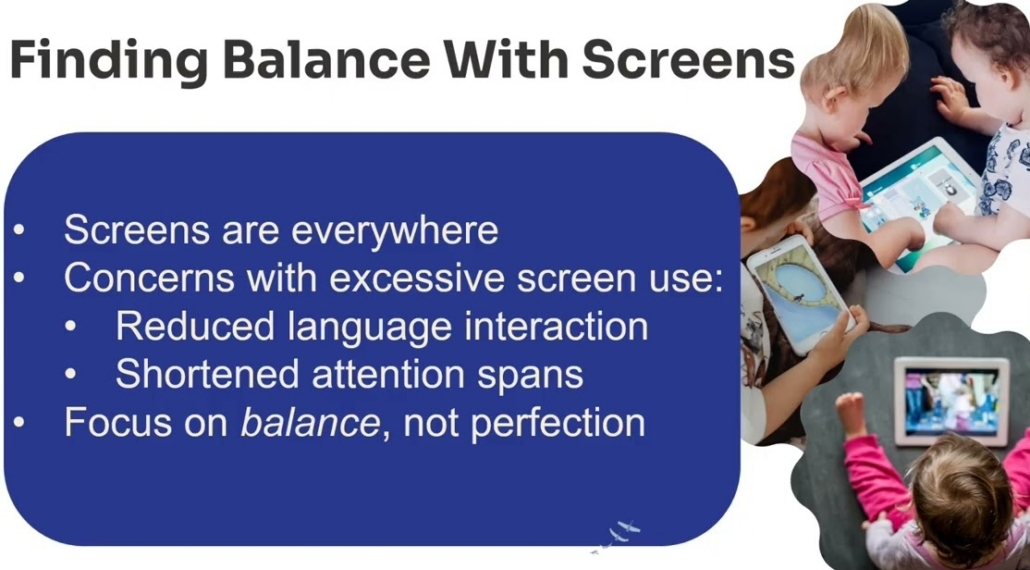
We live in a world where children are surrounded by text on screens, in apps, in social media captions, in the subtitles of YouTube videos. It’s tempting to think that because children are exposed to so much written language digitally, the work of literacy development takes care of itself. It does not.
Strong foundational literacy skills, like phonemic awareness, decoding, vocabulary, reading fluency, and reading comprehension, don’t develop passively from screen exposure. They develop through sustained, intentional engagement with text, especially in the early years.¹
What’s more, the stakes are high. A landmark longitudinal study published in Science found that children who cannot read proficiently by the end of third grade are four times more likely to drop out of high school.² Early literacy is the gateway to academic success, career opportunity, and lifelong learning.
And summers matter enormously. Research on “summer slide”, which is the loss of academic skills during the summer months, consistently shows that children can lose 1-3 months of reading progress over the summer, and that this loss is cumulative over the school years.³
The good news? Even modest amounts of summer reading can prevent that slide entirely!
Reading at Home: It Doesn’t Have to Look Like School
Let’s be honest: the last thing most kids want in July is to sit down and do something that feels like homework. The good news is that it doesn’t have to. Reading at home is most effective when it’s woven into the natural rhythm of family life.
A meta-analysis of home literacy environment research published in Psychological Bulletin found that the frequency and quality of parent-child reading interactions predicted language and literacy outcomes more strongly than any specific program or curriculum.⁴ In other words, I’ve seen the simple act of parents and their children reading together consistently, even just 15 minutes a day, make a difference in a child’s learning.
Here are some ways to make reading a natural, enjoyable part of summer:
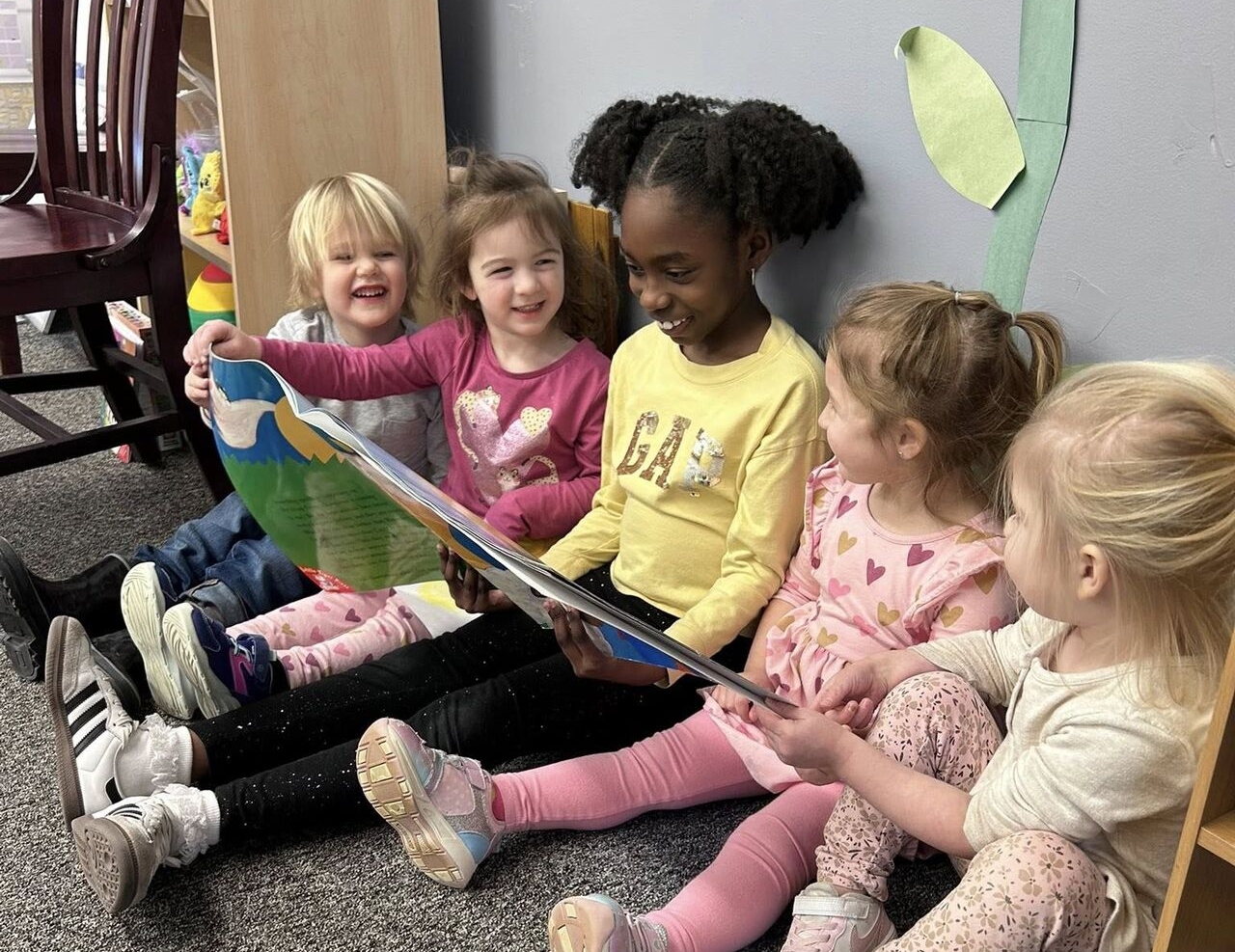
Read aloud together, regardless of age. Even children who can read independently benefit from being read to. Read-alouds expose children to richer vocabulary and more complex sentence structures than children encounter in books they read on their own.⁵ Pick something you both enjoy — there are no wrong answers.
Follow their interests. A child who loves dinosaurs will eagerly devour a nonfiction book about the Cretaceous period. A child obsessed with space will want to read everything. Interest-driven reading is linked to stronger motivation and deeper comprehension.⁶
Make the library an adventure. Summer library programs are free, community-based, and often full of activities. Let your child pick their own books — the autonomy matters.
Talk about what you read. Before, during, and after reading, ask open-ended questions: What do you think will happen? Why did the character do that? How did the ending make you feel? These conversations build critical thinking and comprehension skills that transfer across all subjects.⁷
Embrace “junk reading.” Comics, graphic novels, joke books, and picture-heavy nonfiction all count. Volume matters, and children who read widely — even if not always “seriously” — become stronger readers.⁸
Literacy Activities for Every Age
Literacy development doesn’t always look like reading a book. Here are evidence-based activities tailored to different developmental stages:
For Toddlers (Ages 1–2): Focus on language-rich interaction. Narrate your day, sing songs, do fingerplays, and point out words in your environment. Board books with simple, high-contrast images and repetitive text support early attention and vocabulary development. Even brief, frequent “lap reading” sessions — two or three minutes at a time — build the neural connections that support later literacy.⁹
For Preschoolers (Ages 3–4): This is the prime window for phonological awareness — the ability to hear and manipulate the sounds in language. Rhyming games, silly alliterative tongue twisters, and clapping out syllables in words are all powerful, playful ways to build this foundational skill. Research shows that phonological awareness at age four is one of the strongest predictors of reading success at age seven.¹⁰
For Pre-K (Ages 4–5): Children at this stage are developing print awareness — understanding that text moves left to right, that letters represent sounds, and that words have meaning. Point to words as you read, play alphabet games, and encourage emergent writing (even scribbles!). Dictation — where a child tells you a story and you write it down — is a particularly effective bridge between oral language and literacy.¹¹
For Kindergarteners (Ages 5–6): Children in kindergarten are often beginning to decode — sounding out words for the first time. Word families, simple phonics games, and repeated reading of decodable texts all support this process. Pair phonics practice with high-interest stories to keep motivation strong.
For Primary Grades and Up (Ages 7+): By second and third grade, the focus shifts from learning to read to reading to learn. This is a great age to introduce chapter books, series reading, and nonfiction texts on topics children care about. Encourage independent reading but keep the read-aloud tradition alive — it continues to expand vocabulary and comprehension.¹²
Book Recommendations by Age
Because the best book is the one a child actually wants to read, here are some well-loved titles to get you started this summer:
Toddlers:
- Goodnight Moon by Margaret Wise Brown
- The Very Hungry Caterpillar by Eric Carle
- Brown Bear, Brown Bear, What Do You See? by Bill Martin Jr.
Preschoolers:
- Dragons Love Tacos by Adam Rubin
- Pete the Cat: I Love My White Shoes by Eric Litwin
- Elephant and Piggie series by Mo Willems
Pre-K:
- The Day the Crayons Quit by Drew Daywalt
- We’re Going on a Bear Hunt by Michael Rosen
- Rosie Revere, Engineer by Andrea Beaty
Kindergarteners:
- Fly Guy series by Tedd Arnold
- Elephant and Piggie (still great here!)
- Biscuit series by Alyssa Satin Capucilli
Primary Grade Readers (Ages 6–8):
- Magic Tree House series by Mary Pope Osborne
- Junie B. Jones series by Barbara Park
- I Survived series by Lauren Tarshis
Chapter Book Readers (Ages 8+):
- Charlotte’s Web by E.B. White
- The One and Only Ivan by Katherine Applegate
- Hilo graphic novel series by Judd Winick
Cadence Education’s Summer Reading Program
At Cadence Education, we believe summer is one of the most powerful learning opportunities of the year — and our Summer Reading Program is designed to make the most of it.
Throughout the summer, students read alongside their Cadence schools, tracking their progress and earning rewards for completing a variety of literacy activities. The program is built around the understanding that motivation matters: children who are recognized and celebrated for their reading are more likely to sustain the habit, and habits formed in summer carry into the school year.¹³
The activities go beyond simply counting pages or minutes. Students engage with books in meaningful ways — responding to stories, making connections, and sharing what they’ve read. Rewards are tied to accomplishment and effort, helping children associate reading with pride and positive experience rather than obligation.
This approach aligns with decades of research on intrinsic motivation and literacy. When children develop a sense of themselves as readers — when they say “I’m a person who reads” — they are far more likely to choose books independently and to persist through challenging texts.¹⁴
Whether your child is a beginning reader or a voracious chapter-book consumer, the Cadence Summer Reading Program has a place for them.
Literacy at the Heart of What Cadence Does
Cadence Education’s commitment to literacy doesn’t start in summer — it’s woven into everything we do, from infant care through our elementary programs. Our skills-based curriculum is designed to meet children at their developmental stage, building the foundational literacy skills that research tells us matter most: oral language development, phonological awareness, print concepts, phonics, vocabulary, fluency, and comprehension.
With over 300 schools across the United States — spanning programs from infant care through private elementary school — Cadence serves children and families at every stage of early childhood. Our teachers are trained to recognize and respond to individual literacy needs, and our environments are designed to make language and literacy a natural part of every day, not just during circle time.
Two-thirds of Cadence students who complete our Pre-K program test at an advanced readiness level for kindergarten. That’s not an accident — it’s the result of intentional, research-informed instruction delivered by teachers who genuinely love what they do.
This summer, we invite you to be part of the reading journey. Read together. Read aloud. Read for fun. And know that when your child walks through the doors of their Cadence school in the fall, they’ll be walking in as a reader.
To find a Cadence Education school near you, visit cadencebeta.wpenginepowered.com/.
Footnotes
¹ National Reading Panel. (2000). Teaching children to read: An evidence-based assessment of the scientific research literature on reading and its implications for reading instruction. National Institute of Child Health and Human Development.
² Hernandez, D. J. (2011). Double jeopardy: How third-grade reading skills and poverty influence high school graduation. Annie E. Casey Foundation. (Derived from longitudinal data; often cited alongside peer-reviewed studies in reading science, including those by Juel, 1988, in Reading Research Quarterly.*)
³ Cooper, H., Nye, B., Charlton, K., Lindsay, J., & Greathouse, S. (1996). The effects of summer vacation on achievement test scores: A narrative and meta-analytic review. Review of Educational Research, 66(3), 227–268.
⁴ Bus, A. G., van IJzendoorn, M. H., & Pellegrini, A. D. (1995). Joint book reading makes for success in learning to read: A meta-analysis on intergenerational transmission of literacy. Review of Educational Research, 65(1), 1–21.
⁵ Cunningham, A. E., & Stanovich, K. E. (1998). What reading does for the mind. American Educator, 22(1–2), 8–15.
⁶ Guthrie, J. T., & Wigfield, A. (2000). Engagement and motivation in reading. In M. L. Kamil et al. (Eds.), Handbook of Reading Research (Vol. 3, pp. 403–422). Lawrence Erlbaum.
⁷ Beck, I. L., McKeown, M. G., & Kucan, L. (2013). Bringing words to life: Robust vocabulary instruction (2nd ed.). Guilford Press.
⁸ Krashen, S. D. (2004). The power of reading: Insights from the research (2nd ed.). Libraries Unlimited.
⁹ Hoff, E. (2003). The specificity of environmental influence: Socioeconomic status affects early vocabulary development via maternal speech. Child Development, 74(5), 1368–1378.
¹⁰ Bryant, P. E., MacLean, M., Bradley, L., & Crossland, J. (1990). Rhyme and alliteration, phoneme detection, and learning to read. Developmental Psychology, 26(3), 429–438.
¹¹ Clay, M. M. (2001). Change over time in children’s literacy development. Heinemann.
¹² Chall, J. S. (1983). Stages of reading development. McGraw-Hill.
¹³ Gambrell, L. B. (1996). Creating classroom cultures that foster reading motivation. The Reading Teacher, 50(1), 14–25.
¹⁴ Wigfield, A., & Eccles, J. S. (2000). Expectancy–value theory of achievement motivation. Contemporary Educational Psychology, 25(1), 68–81.