

Welcome and Introduction
Okay, so for those of you who just joined us, are there a few people still coming into the room? Welcome to Toilet Training Tips and Tricks.
We’re so happy to have you here for the fifth in the series of parenting webinars that we began hosting this fall. With more than 30 years in business, Cadence Education has established itself as one of the premier early childhood educators in the United States. We’re proud to serve over 30,000 families across the country, operating more than 300 private preschools and elementary schools that prepare students to thrive in their school age years and beyond.
At Cadence Education, our promise is to provide parents with peace of mind by giving children an exceptional education every fun-filled day in a place as nurturing as home. We’re committed to fostering strong relationships with our families and providing meaningful communication to support your child’s development.
The Cadence parent partnership series is a new resource that we began offering earlier this fall. Our webinars are designed to help you navigate common parenting challenges while supporting your child’s growth and development.
We’re so pleased that you’ve chosen to spend this time with us today as we discuss a topic that every parent deals with, toilet training. Whether you’re a new parent or a seasoned one, understanding the stages of toilet training and learning some tips and tricks can help you navigate through this stage of development more easily for you and for your child.
Meet the Presenters
Before we dive into today’s content, let’s take a moment to introduce ourselves.
I’m Maggie Walsh, vice president of education here at Cadence Education. I bring 25 years of experience in teaching and professional development, and I’m passionate about supporting educators and families in fostering children’s growth and success.
Joining me today is my colleague Paula Hermano.
Hi, I’m Paula Hermano, director of programs for Montessori schools with 20 years of experience in infant toddler and early childhood programs, teacher education, and school leadership. I am very thrilled to be here today.
Our goal is to support your children’s teachers, school directors, and you families as we work together to create enriching educational experiences.
What We’ll Cover Today
Over the next half hour, we’ll focus on understanding the stages of potty training development and share effective tips and tricks that you can use to help your child learn this important life skill.
We’re also excited to address some questions from families during our Q&A portion at the end. You can submit questions throughout the session.
All resources and a recording of this webinar will be shared in a follow-up email next week.
Understanding the Stages of Potty Training
You might already be aware that potty training involves a few different stages of progression. The Northern Illinois University Child Development and Family Center summarizes potty training in four distinct stages:
- Stage 1: Toilet Play
- Stage 2: Toilet Practice
- Stage 3: Toilet Learning
- Stage 4: Independent Toileting
Your child’s teacher will support them at whatever stage they are in. There is not just one way to potty train.
When to Start Potty Training
The Cleveland Clinic recommends that the best time for supporting a child in potty training is between 2½ and 3½ years old.
At this stage, children typically have:
- Stronger gross motor skills
- Improved verbal communication
- Interest in the bathroom routine
- Awareness of being wet or soiled
Stage 1: Toilet Play
Children in this stage may:
- Pretend to use the toilet
- Observe others in the bathroom
- Ask questions about the toilet
- Show curiosity about the process
Stage 2: Toilet Practice
Children begin practicing key skills such as:
- Flushing the toilet
- Removing clothing
- Sitting on a potty or toilet seat
- Washing hands
- Recognizing whether their diaper is wet or dry
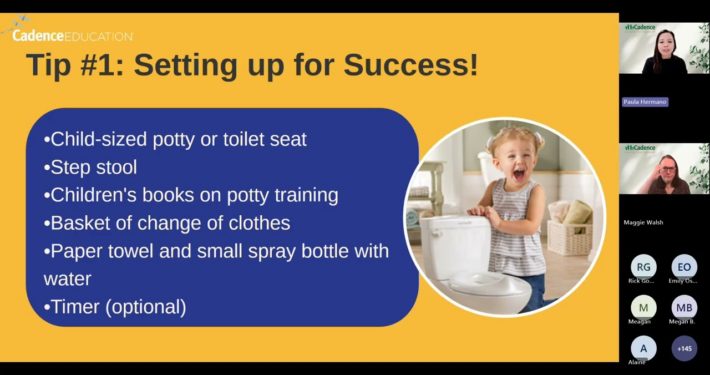
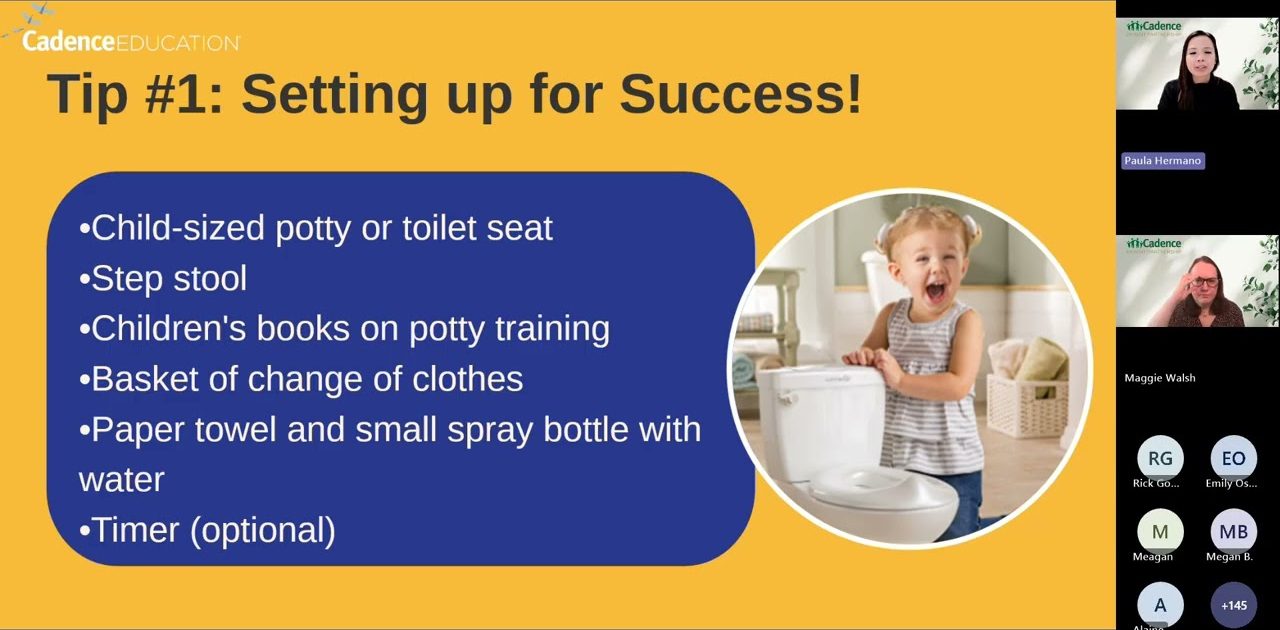
Setting Up for Success
Creating the right environment is essential. Focus on making the experience:
- Accessible
- Comfortable
- Empowering
Helpful tools include:
- Child-size potty or toilet seat
- Step stool
- Books about potty training
- Extra clothes and underwear
- Cleaning supplies
- Optional timer for routine building
Stage 3: Toilet Learning
At this stage, children begin to:
- Connect the feeling of needing to go with using the toilet
- Communicate their needs
- Show interest in wearing underwear
- Pull clothing up and down independently
Tips for Supporting Toilet Learning
- Narrate diapering and bathroom routines
- Encourage independence with dressing
- Introduce potty-related vocabulary and tools
- Allow pressure-free practice
- Build consistent routines
- Watch for cues and signals
Encouragement and Mindset
Maintain a positive, supportive approach:
- Celebrate small successes
- Use clear, simple language
- Praise specific actions
- Stay calm during setbacks
Accidents are part of the learning process.
Stage 4: Independent Toileting
Even at this stage, children continue developing skills:
- Urination typically comes first
- Bowel movements take longer
- Daytime dryness develops before nighttime
- Nighttime control may take months or years
Common Challenges and Solutions
Difficulty with Bowel Movements
- Use distractions like bubbles or songs
- Encourage relaxation techniques
- Be patient and supportive
Distractions During Play
- Use a timer for reminders
- Build potty breaks into routines
Nighttime Accidents
- Stay positive and avoid punishment
- Understand that this stage takes time
Bedwetting is not typically considered a concern until around age 8, according to pediatricians from the Cleveland Clinic.
Helpful Resources
Books for children and adults can support potty training, but remember:
There is no single “right” approach. Choose strategies that work best for your child and your family.
Summary
Successful toilet learning involves:
- Understanding developmental stages
- Creating a supportive environment
- Building consistent routines
- Encouraging independence
- Staying patient and positive
Partnering with your school community can provide additional support throughout the process.
Q&A Highlights
What if my child will pee in the potty but not poop?
This is common. Focus on:
- Reinforcing routines
- Watching for cues
- Creating a relaxed environment
How do I work with my daycare provider?
- Communicate openly
- Align on approach
- Stay consistent between home and school
What about children with speech delays?
- Use sign language
- Continue modeling and reading
- Build routines based on cues
When should I start nighttime training?
- After daytime independence is established
- Start with naps first
- Avoid waking your child overnight
Closing
Thank you so much for your time today.
We’ll follow up with:
- Webinar recording
- Resource list
- FAQ document
We hope you’ll join us for our next session.